
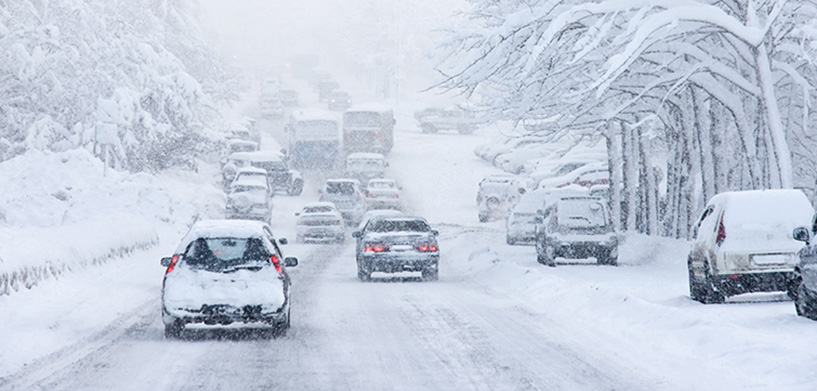
North America is in the thick of winter, and Mother Nature is having her way. Over the past several days, a large swath of the United States has been walloped with a massive winter storm, “bringing subzero temperatures and halting air and road traffic. Tree branches and power lines snapped under the weight of ice, and hundreds of thousands of homes and businesses in the Southeast were left without electricity.” (AP)
Public safety agencies need to be ready
Climate impact
Although winter is getting shorter and warmer in many parts of North America, winter storms are hitting harder than ever, which scientists attribute to climate change. A warmer atmosphere holds more moisture, creating the conditions for heavier snow, more freezing rain and intense cold waves when temperatures drop. On top of this, a rapidly warming Arctic is disrupting the jet stream and pushing frigid air farther south. As a result, communities are experiencing winter weather far outside historical norms.
From snow falling on Gulf Coast beaches to record breaking freezes overwhelming power grids and massive winter storms impacting much of the United States, the past few years have shown that winter hazards are shifting fast.
Operational consequences
These changes carry real operational consequences with storms forming more quickly, moving unpredictably and producing higher precipitation totals. As a result, roads become impassable, 911 call volumes spike and public safety agencies must coordinate large-scale responses in conditions that rapidly evolve.
This is where resilient and unified public safety technology becomes essential. For example, agencies need to monitor conditions in real time, deploy resources quickly and keep communication lines open across jurisdictions, especially when weather affects multiple counties at once.
Hexagon public safety solutions are built for these moments. With HxGN OnCall Dispatch, agencies gain a unified operating picture that helps them detect changing hazards, command resources effectively, control the flow of information and collaborate across teams and regions.
What agencies need to stay ahead of winter storms:
- Real-time situational awareness: When storms move quickly, agencies need visibility into road conditions, outages, 911 call spikes, responder locations and cross-agency activity. Hexagon solutions bring this information together in one operational view.
- Smarter resource coordination across counties and regions: Winter storms tend to spread across wide geographical regions. As such, multicounty and statewide responses require synchronized dispatch and shared data, a core strength of OnCall Dispatch.
- Clear communication with responders and the public: As storms evolve, agencies must quickly share warnings, travel advisories and critical updates. Hexagon public safety tools help maintain consistent communication across CAD, radio and mobile devices.
- Systems that adapt to changing weather patterns: With climate trends pushing snow and ice into regions not historically prepared for them, agencies need flexible systems that can scale during sudden surges in demand.
Preparing now for the next winter storm
With the winter season upon us, public safety agencies must be ready to respond to both familiar hazards and extreme new events that challenge traditional planning.
Hexagon public safety technology gives agencies the clarity, coordination and confidence they need to protect communities when winter becomes dangerous. As weather patterns continue to shift, modernizing emergency response is not only optional, but is also the foundation of long-term resilience.

Ben Ernst
Ben Ernst is the vice president and general manager for North America Public Safety at Hexagon’s Safety, Infrastructure & Geospatial division. With more than 25 years of experience in technology solutions, he leads a team of professionals in the public safety industry, implementing mission-critical CAD and RMS systems for our nation’s first responders.